The GASA Future Scholar Challenge welcomes young people aged 10–18 to explore real-world questions through English reading, research, expression and dialogue. Primary students begin with curiosity and interdisciplinary exploration. Secondary students progress into Humanities & Social Sciences, Science & Engineering, and Medicine & Life Sciences. We help young people find a question genuinely worth pursuing.
Connecting global horizons · Taking curiosity into a wider world
From an everyday observation to a question worth pursuing, and from a personal idea to dialogue with peers across cultures, GASA helps inquiry move beyond the classroom into the real world.
University scholars and mentorsGLOBAL MENTORS
Academic dialogue in EnglishGLOBAL DIALOGUE
Interdisciplinary collaboration · Real questions
Global Exploration Workshop: solving problems together
Students from different backgrounds observe, discuss, research and refine ideas about the environment, communities, technology and health. Disciplines are tools for understanding, rather than boundaries.
Global Scholar Summit · Ideas worth hearing
Global Scholar Summit: research that is heard
Students present their research in English and discuss it with scholars, reviewers and peers. We value their ability to explain reasoning, respond to different views and refine judgments.
Humanities & Social SciencesHUMANITIES & SOCIAL SCIENCES
Science & EngineeringSCIENCE & ENGINEERING
Medicine & Life SciencesMEDICINE & LIFE SCIENCES
Different questions and disciplines; a shared starting point in the real world.
COMPETITION PATHS & DISCIPLINES
Four exploration pathways · Different interests, brighter possibilities
GASA offers Young Explorers for ages 10–12 and three academic directions for ages 13–18. Every pathway starts with a real question and develops through individual research, expression and dialogue.
A
Primary 10–12
Young Explorers
Young Explorers
Start with curiosity and discover the real world
Explore real questions from everyday life through observation, curiosity, collaboration and creative expression. Develop the confidence to investigate and solve problems.
Example topics
Community and environment, technology and daily life, health and happiness, culture and the world
B
Secondary 13–18
Humanities & Social Sciences
Humanities & Social Sciences
Find answers in human stories and social questions
Investigate human stories and social phenomena through culture, economics, education and psychology, developing interpretations supported by evidence.
Example topics
Educational equity, cities and communities, cultural heritage, digital society, global governance, psychology and behaviour
C
Secondary 13–18
Science & Engineering
Science & Engineering
Understand the world through science and solve problems with technology
Apply scientific methods and engineering thinking to challenges involving nature, technology and sustainable development.
Example topics
Sustainable energy, AI and robotics, new materials, environment and climate, smart cities, space and Earth
D
Secondary 13–18
Medicine & Life Sciences
Medicine & Life Sciences
Explore real scientific questions about life and health
Explore questions about life processes, disease, human health and biotechnology. Use evidence and scientific methods to develop thoughtful explanations and research proposals.
Example topics
Life processes and genetics, adolescent health, disease and prevention, biotechnology, medical innovation
See real growth through a piece of work
Multidimensional scholarly review creates a personal GASA growth profile, helping students see their strengths and next steps.
GASA Scholar Portfolio
Scholarly review · Six-dimensional profile · Research records
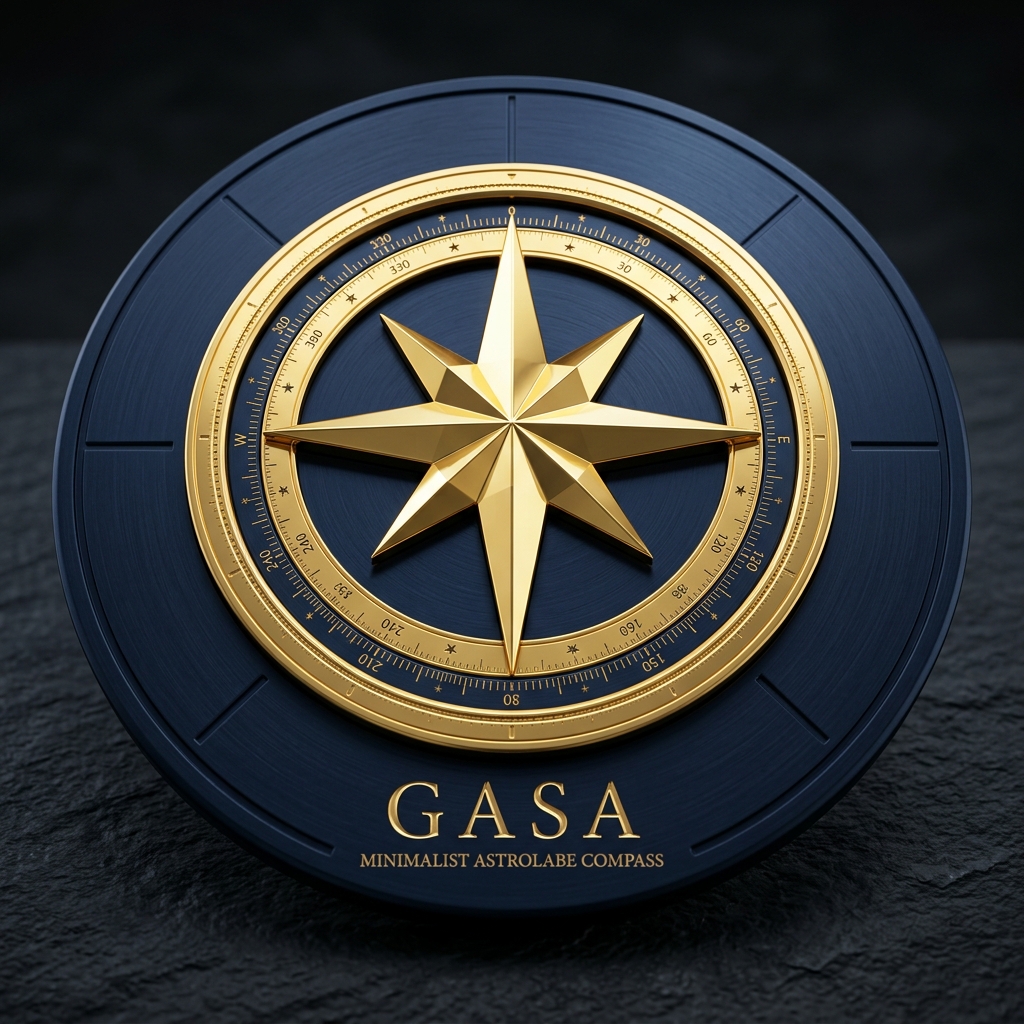
Academic Symbolism: The octagram Polaris guides truth and discovery, while celestial dual rings represent rational inquiry and inclusive vision—inspiring scholars to reach the stars through adversity (Per Aspera Ad Astra).
Ceremonial Crest: The cross compass integrates the Polaris emblem, with four quadrants representing exploration, rigor, breadth, and truth, bearing the motto "PER ASPERA AD ASTRA" (Through adversity to the stars).
🏛️ Official 2D Heraldic CrestHERALDRY
🔍Click to inspect in fullscreen
GASA 2D HERALDIC CREST
PER ASPERA AD ASTRA
Gilded quadrant filigree meets the solid cross and central octagram with flowing Latin ribbon, reflecting classical scholarly gravitas.
🛡️ Official 3D Relief CrestRELIEF
🔍Click to inspect in fullscreen
GASA 3D CEREMONIAL CREST
SOLID GOLD RELIEF
High-relief starburst forged into the heraldic cross, blending deep navy and radiant gold, honoring profound scholarly heritage.
Quill & parchment: independent thesis, logical deduction, and rigorous citation.
IIB. Humanities & Social Sciences
Silicon microchip & circuits: algorithmic prototypes, systems engineering, and presentations.
IIIC. Science & Engineering
Orbital atom: integrating sciences and humanities to address real-world challenges.
IVD. Medicine & Life Sciences
Astrolabe compass & Polaris: safeguarding youthful curiosity and scholarly awakening.
Central Emblem & Motto: The radiant central octagram connects truth, while the Latin motto “PER ASPERA AD ASTRA” (Through adversity to the stars) inspires every young scholar to reach higher summits.
🔍
GASA High-Resolution Inspection
HIGH RESOLUTION PREVIEW
100%
💡 Tip: Click image to toggle 100% / 175% zoom; use top [+] [−] to scale; press ESC to return.
GASA 2026 OFFICIAL SAMPLE PROMPT
Track A · Young Explorers · Example topics
[Official Preliminary Prompt Example]
"In an era where artificial intelligence increasingly synthesizes knowledge, does the human capacity for critical inquiry become more vital, or fundamentally obsolete? Discuss with specific reference to historical or contemporary evidence."
Word Count Guidelines:500–800 Word Argumentative Essay
Academic Format:MLA / APA Concise Citation Standards
[Core Evaluative Criteria]
Thesis Statement Clarity: Whether a clear, disputable claim is established.
Counterargument Analysis: Anticipating opposing viewpoints with counter-evidence.
 Interdisciplinary collaboration · Real questions